Skip to content
928.523.7182 | General Inquiries | Web Inquiries | Subscribe To Our E-News
FacebookInstagramBlueskyYouTubeLinkedIn
Ecological Restoration Institute Logo Ecological Restoration Institute Logo Ecological Restoration Institute Logo
  • About
    • Leadership
    • History
    • Annual Reports and Work Plans
    • Staff Directory
    • Employment Opportunities
  • Research
    • Landscape Monitoring and Research
    • Long-term Ecological Assessment and Restoration Network (LEARN)
    • Wildfire Effects
      • Flagstaff Fire History Map
    • Ponderosa Pine Ecosystem
    • Mixed Conifer Ecosystem
    • Pinyon-Juniper Ecosystem
    • Social and Economic Research
    • Best Available Scientific Information (BASI)
  • Forest Operations & Biomass
    • Forest Restoration and Fuel Reduction Operations
      • ThinCost 1.0: A spreadsheet-based model to estimate thinning costs
      • In-woods Mobile Processing
      • Biomass Disposal
    • Workforce Training and Development
    • SWERI Wood Utilization Team Includes:
      • Business Clusters and Markets
      • Chip-and-Ship Project
  • Science Outreach
  • Tribal Forest Restoration Program
    • Wood For Life
  • Publications
  • Media and Blogs
    • Media
    • Communities In Action
    • Science Flash Blog
    • Field Notes Blog
    • Before and After Photos
  • About
    • Leadership
    • History
    • Annual Reports and Work Plans
    • Staff Directory
    • Employment Opportunities
  • Research
    • Landscape Monitoring and Research
    • Long-term Ecological Assessment and Restoration Network (LEARN)
    • Wildfire Effects
      • Flagstaff Fire History Map
    • Ponderosa Pine Ecosystem
    • Mixed Conifer Ecosystem
    • Pinyon-Juniper Ecosystem
    • Social and Economic Research
    • Best Available Scientific Information (BASI)
  • Forest Operations & Biomass
    • Forest Restoration and Fuel Reduction Operations
      • ThinCost 1.0: A spreadsheet-based model to estimate thinning costs
      • In-woods Mobile Processing
      • Biomass Disposal
    • Workforce Training and Development
    • SWERI Wood Utilization Team Includes:
      • Business Clusters and Markets
      • Chip-and-Ship Project
  • Science Outreach
  • Tribal Forest Restoration Program
    • Wood For Life
  • Publications
  • Media and Blogs
    • Media
    • Communities In Action
    • Science Flash Blog
    • Field Notes Blog
    • Before and After Photos
Previous Next
  • View Larger Image

Fall 2024 ERI Newsletter – Forest Operations and Biomass Utilization – Field Notes

The Forest Operations and Biomass Utilization program at ERI focuses on improving the overall economics of restoration treatments through improving operational efficiency and increasing wood and biomass utilization. This fall, ERI staff are working on the following key projects:

Transaction Evidence Appraisal General Sale Attributes

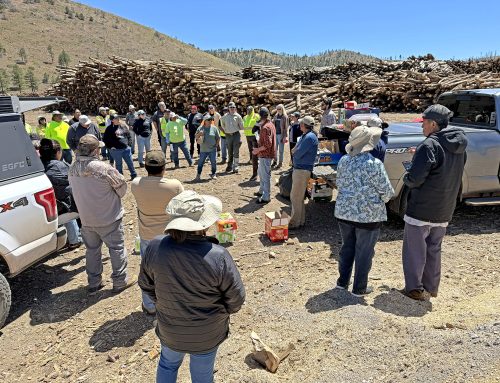
ERI staff have been analyzing Transaction Evidence Appraisal (TEA) data from recent timber sales in the USDA Forest Service Rocky Mountain and Southwestern regions to identify the most significant cost factors of planned fuels treatments. The data revealed that 30–35% of the total sale appraisal cost includes the cost to transport various timber products from fuels treatment project sites to sawmills and other lumber processing facilities.

Along with the projected stump-to-truck operational cost (60-65% of the estimate), the hauling cost represents a considerable portion of the total TEA cost estimation. In Region 3, the Coconino and Kaibab national forests have the highest transportation cost estimates for saw-timber and biomass-timber products. For fuels treatments completed on these two forests, timber products travel an average of 165 miles to reach the nearest processing facility, signifying the need to continue to explore and develop new and innovative lumber markets to lower treatment costs and increase the pace and scale of landscape treatments.

Biochar Application in the Soil of Northern Arizona

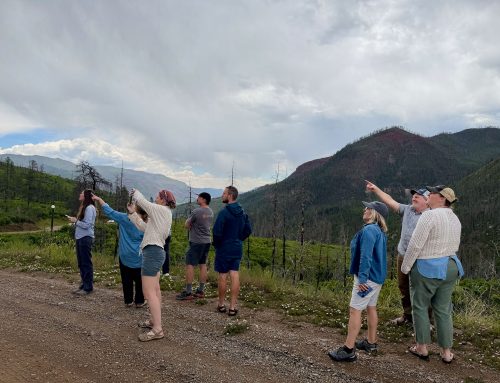
The team continues to study the impact of biochar on soil affected by the 2022 Pipeline Fire in northern Arizona. Results show that soil properties were improved through an increase in soil organic carbon, pH, and electrical conductivity.
An additional biochar application study began this fall in the Schultz Fire burn area. ERI teamed with Coconino National Forest to study whether biochar impacts the growth of ponderosa pine in wildfire-affected soil.
2024-12-04T19:02:09+00:00November 26th, 2024|Field Notes, Forest Operations - Biomass|

Share This Story

FacebookXRedditLinkedInWhatsAppTumblrPinterestVkEmail

Related Posts

Winter 2025 ERI Newsletter – SWERI ReShape Program
Gallery

Winter 2025 ERI Newsletter – SWERI ReShape Program

Winter 2025 ERI Newsletter – Human Dimensions and Partnerships
Gallery

Winter 2025 ERI Newsletter – Human Dimensions and Partnerships

Winter 2025 ERI Newsletter – Tribal Forest Stewardship and Restoration Program – Field Notes
Gallery

Winter 2025 ERI Newsletter – Tribal Forest Stewardship and Restoration Program – Field Notes

Field Note Categories

  • Ecology
  • Forest Operations – Biomass
  • Human Dimensions
  • Native American Forest and Rangeland Management Program
  • Science Delivery
Ecological Restoration Institute White Logo

Contact Information

  • Mailing Address:
    PO Box 15017
    Flagstaff AZ 86011

  • Physical Address:
    Northern Arizona University Southwest Forest Science Complex (Bldg #82)

  • 928.523.7182

Subscribe

ERI E-Newsletter Signup

Publications

  • Library
  • Recent ERI Publications
  • Recent Journal Publications
  • Fact Sheets
  • White Papers
  • Working Papers
  • General and Technical Reports

Pages

  • Employment Opportunities
  • ERI Video: Shifting paradigms in Forest Restoration
  • History
  • Home
  • Latest News
  • Leadership
  • Research
  • Restoration and Fuel Reduction Operations
  • Science Outreach
  • Science to Stewardship: Arizona Cross‑Boundary Forest Restoration Workshop
  • Staff
  • Tribal Forest Restoration Program

Recent Posts

  • Post Doctoral Scholar Positions April 1, 2026
  • Manager, Restoration Ecology & Forest Resilience February 6, 2026
  • Winter 2025 ERI Newsletter – SWERI ReShape Program December 9, 2025
Northern Arizona University sits at the base of the San Francisco Peaks, on homelands sacred to Native Americans throughout the region.
We honor their past, present, and future generations, who have lived here for millennia and will forever call this place home.

NAU is an equal opportunity provider.
ERI's research is funded by many sources, including the USDA Forest Service and the AZ Board of Regents through the Technology, Research and Innovation Fund (TRIF).


© Copyright    |   Ecological Restoration Institute    |   All Rights Reserved   |   Site Design by Shine Creative Industries
FacebookInstagramBlueskyYouTubeLinkedIn
Page load link
Go to Top