ERI’s Policy and Communications group, comprised of Niki vonHedemann, Sarah Devenport, Scott Franz, and led by Melanie Colavito, has been full speed ahead on a number of projects that advance best available knowledge on restoration and land management in the Southwest US. Here are some notable highlights from their recent work:
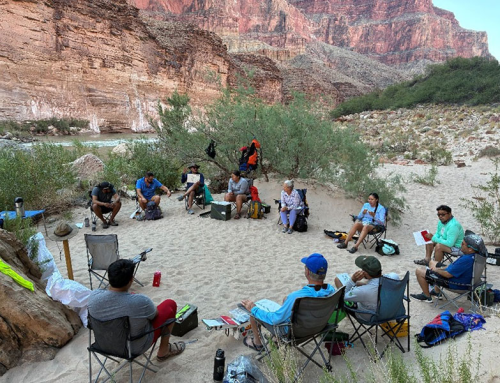
- Sarah and Niki attended meetings, developed relationships, and conducted in-person interviews with key players with the Zuni Mountains Collaborative Forest Landscape Restoration Program (CFLRP), based in New Mexico, and the Western Klamath CFLRP, based in northern California, to better understand how these groups engage a variety of interested and affected entities in collaborative forest governance.
- Sarah and Melanie catalogued the recent history of the Four Forest Restoration Initiative (4FRI), building on previous work published by the ERI (“The history of the Four Forest Restoration Initiative: 1980s–2010”). This upcoming white paper intends to maintain a record of collaborative efforts, planning, and implementation related to 4FRI and is currently under external review.
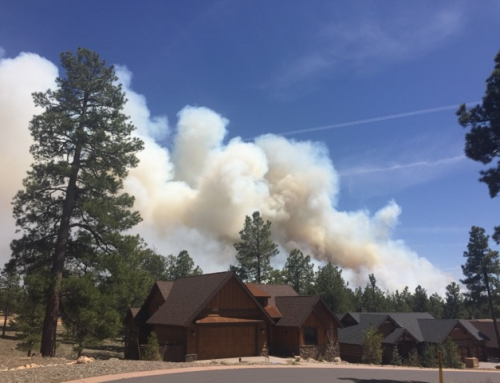
- Sarah, Melanie, and Niki collaborated with Cat Edgeley from the NAU School of Forestry to administer surveys in two Flagstaff area neighborhoods following two separate prescribed burns to explore how residents experience smoke from beneficial fire, their communication preferences, and their engagement with health-protective behaviors.Results will be used to facilitate the continued use of beneficial fire, while mitigating negative impacts to nearby residents.
- Scott collaborated as well with Cat Edgeley to complete research on wildfire management incentives, using a unique anonymous survey approach to elicit opinions on how to better reward successful wildfire management operations. This work is summarized in a paper that has been accepted and is soon to be published by Fire Ecology.
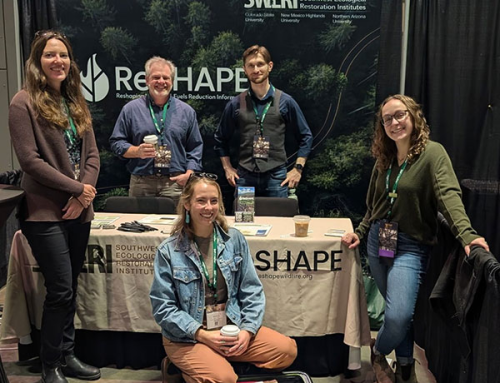
- Scott, along with members of the ReShape Communications team, has helped build outreach and educational material for the ReShape program’s flagship tool, the Treatment and Wildfire Interagency Geodatabase (TWIG). The video tutorials and in person workshops are part of the team’s efforts to facilitate use of TWIG and help policymakers, researchers, and the public better understand the interaction between wildfire and land management efforts on our landscapes.