Skip to content
928.523.7182 | General Inquiries | Web Inquiries | Subscribe To Our E-News
FacebookInstagramBlueskyYouTubeLinkedIn
Ecological Restoration Institute Logo Ecological Restoration Institute Logo Ecological Restoration Institute Logo
  • About
    • Staff Directory
    • Leadership
    • History
    • Annual Reports and Work Plans
    • Employment Opportunities
  • Research
    • Landscape Monitoring and Research
    • Long-term Ecological Assessment and Restoration Network (LEARN)
    • Wildfire Effects
      • Flagstaff Fire History Map
    • Ponderosa Pine Ecosystem
    • Mixed Conifer Ecosystem
    • Pinyon-Juniper Ecosystem
    • Social and Economic Research
    • Best Available Scientific Information (BASI)
  • Forest Operations & Biomass
    • Forest Restoration and Fuel Reduction Operations
      • ThinCost 1.0: A spreadsheet-based model to estimate thinning costs
      • In-woods Mobile Processing
      • Biomass Disposal
    • Workforce Training and Development
    • SWERI Wood Utilization Team Includes:
      • Business Clusters and Markets
      • Chip-and-Ship Project
  • Science Outreach
  • Tribal Forest Stewardship and Restoration Program
    • Wood For Life
  • Publications
  • Media and Blogs
    • Media
    • Communities In Action
    • Science Flash Blog
    • Field Notes Blog
    • Before and After Photos
  • About
    • Staff Directory
    • Leadership
    • History
    • Annual Reports and Work Plans
    • Employment Opportunities
  • Research
    • Landscape Monitoring and Research
    • Long-term Ecological Assessment and Restoration Network (LEARN)
    • Wildfire Effects
      • Flagstaff Fire History Map
    • Ponderosa Pine Ecosystem
    • Mixed Conifer Ecosystem
    • Pinyon-Juniper Ecosystem
    • Social and Economic Research
    • Best Available Scientific Information (BASI)
  • Forest Operations & Biomass
    • Forest Restoration and Fuel Reduction Operations
      • ThinCost 1.0: A spreadsheet-based model to estimate thinning costs
      • In-woods Mobile Processing
      • Biomass Disposal
    • Workforce Training and Development
    • SWERI Wood Utilization Team Includes:
      • Business Clusters and Markets
      • Chip-and-Ship Project
  • Science Outreach
  • Tribal Forest Stewardship and Restoration Program
    • Wood For Life
  • Publications
  • Media and Blogs
    • Media
    • Communities In Action
    • Science Flash Blog
    • Field Notes Blog
    • Before and After Photos
Previous Next
  • View Larger Image

Summer 2026 ERI Newsletter – Forest Operations and Biomass Utilization – Field Notes

ERI’s Forest Operations program completed several major research efforts this season, advancing understanding of treatment costs, slash‑management strategies, and biomass utilization across the Southwest. The team also continued work on biochar applications and published new guidance to help land managers select appropriate production technologies.

Program Updates

  • Transaction Evidence Appraisal study — Tucker Herbert completed a multi‑year analysis of the Forest Service’s TEA method using timber sale data from Regions 2 and 3. The study identified how operational factors influence harvesting and transportation cost estimates and bidding outcomes and highlighted opportunities to improve TEA accuracy for future thinning projects.
  • Slash‑management research — The team is advancing its evaluation of cut‑to‑length systems at Marshall Lake, where field data have been collected to compare whole‑tree (WT) harvesting and cut‑to‑length (CTL) approaches. Results will inform slash‑management strategies that use in-woods chipping or mastication following CTL thinning for 4FRI treatments and broader restoration efforts.
  • Biochar field studies — ERI’s biochar research team, led by Dipita Ghosh, continues to study how forest‑derived biochar influences soil recovery, nutrient dynamics, microbial activity, and carbon storage following wildfires. Several manuscripts are currently in preparation.
  • Biochar technology comparison — Dipita also published a comparative analysis of current biochar production technologies, offering practical guidance to land managers on selecting systems that match project goals, mobility needs, and cost constraints. The study demonstrates how woody debris from restoration projects can be converted into a valuable resource for soil health and forest resilience.
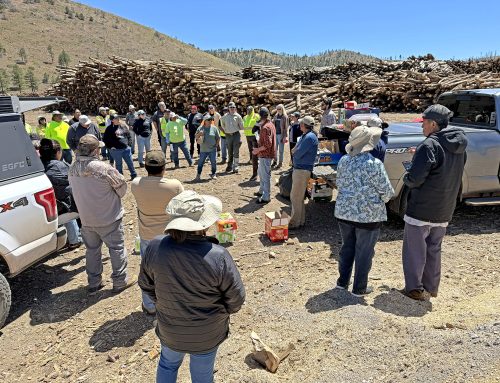
  • Logging and Forest Roads Institute (LARI) — Herbert and Han-Sup Han joined USDA Forest Service staff to help Forest Service employees, many without a forest engineering background, build practical skills in transportation planning, road design and layout, construction, and maintenance. Graduates return to their home forests with a sharper eye for road conditions and a deeper understanding of how good road design supports safe, efficient restoration work.
2026-07-15T22:36:16+00:00July 10th, 2026|Field Notes, Forest Operations - Biomass|

Share This Story

FacebookXRedditLinkedInWhatsAppTumblrPinterestVkEmail

Related Posts

Summer 2026 ERI Newsletter – Tribal Forest Stewardship and Restoration Program – Field Notes
Gallery

Summer 2026 ERI Newsletter – Tribal Forest Stewardship and Restoration Program – Field Notes

Summer 2026 ERI Newsletter – SWERI ReShape Program
Gallery

Summer 2026 ERI Newsletter – SWERI ReShape Program

Summer 2026 ERI Newsletter – Human Dimensions and Partnerships
Gallery

Summer 2026 ERI Newsletter – Human Dimensions and Partnerships

Field Note Categories

  • Ecology
  • Forest Operations – Biomass
  • Human Dimensions
  • Tribal Forest Stewardship and Restoration Program
  • Science Delivery
Ecological Restoration Institute White Logo

Contact Information

  • Mailing Address:
    PO Box 15017
    Flagstaff AZ 86011

  • Physical Address:
    Northern Arizona University Southwest Forest Science Complex (Bldg #82)

  • 928.523.7182

Subscribe

ERI E-Newsletter Signup

Publications

  • Library
  • Recent ERI Publications
  • Recent Journal Publications
  • Fact Sheets
  • White Papers
  • Working Papers
  • General and Technical Reports

Pages

  • Employment Opportunities
  • ERI Video: Shifting paradigms in Forest Restoration
  • History
  • Home
  • Latest News
  • Leadership
  • Research
  • Restoration and Fuel Reduction Operations
  • Science Outreach
  • Science to Stewardship: Arizona Cross‑Boundary Forest Restoration Workshop
  • Staff
  • Tribal Forest Restoration Program

Recent Posts

  • Summer 2026 ERI Newsletter – Tribal Forest Stewardship and Restoration Program – Field Notes July 13, 2026
  • Summer 2026 ERI Newsletter – SWERI ReShape Program July 10, 2026
  • Summer 2026 ERI Newsletter – Human Dimensions and Partnerships July 10, 2026
Northern Arizona University sits at the base of the San Francisco Peaks, on homelands sacred to Native Americans throughout the region.
We honor their past, present, and future generations, who have lived here for millennia and will forever call this place home.

NAU is an equal opportunity provider.
ERI's research is funded by many sources, including the USDA Forest Service and the AZ Board of Regents through the Technology, Research and Innovation Fund (TRIF).


© Copyright    |   Ecological Restoration Institute    |   All Rights Reserved   |   Site Design by Shine Creative Industries
FacebookInstagramBlueskyYouTubeLinkedIn
Page load link
Go to Top